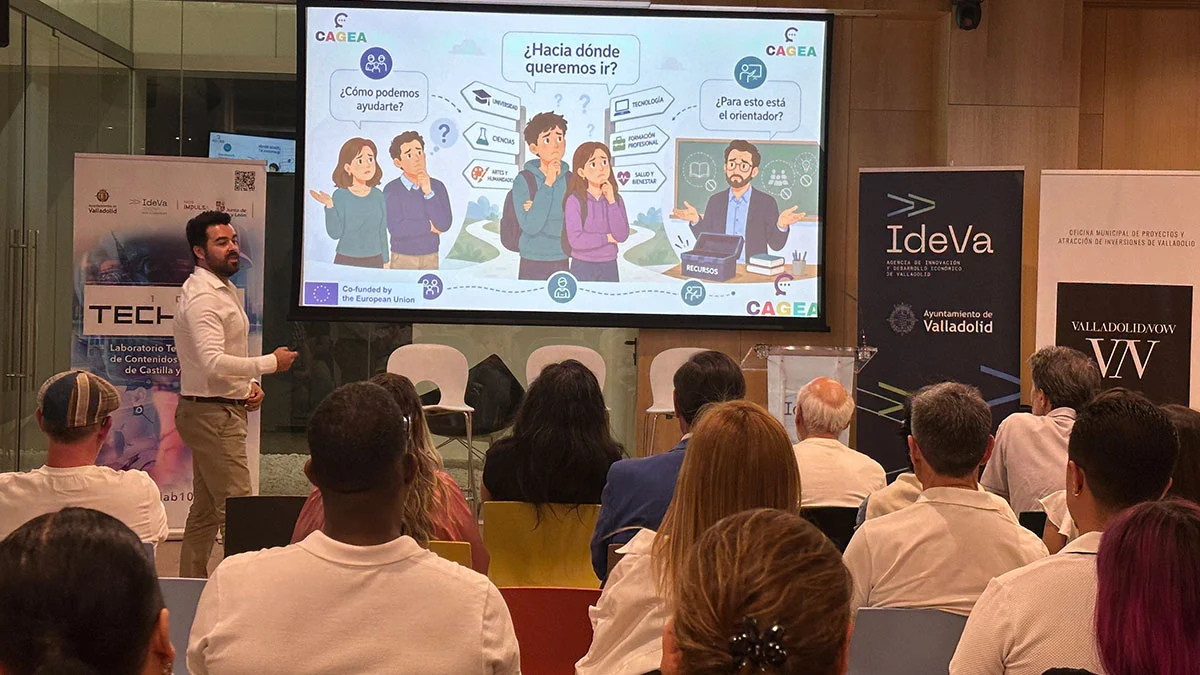
Formative Footprint organised two multiplier events in Valladolid in October 2026 to present the project results to local stakeholders. The two events targeted different audiences. The first focused on teachers, school counsellors and other education professionals, and the second focused mainly on students. Together they reached 35 participants (33 unique individuals, as two representatives of local educational organisations attended both events). Both events followed the planned agenda and took place within the planned timeframe.
The first event brought together primary and secondary school teachers, members of the Educational Guidance Team (Equipo de Orientación Educativa), representatives of the Provincial Education Delegation, teacher training centres, the Pedagogical Resources Centre, the University of Valladolid, the local employment agency, and several foundations and NGOs working in education, rural development and youth. The audience was well suited to the event’s aim, since these participants are in a position to bring the CAGEA approach into schools and guidance services.
The second event focused on young people, mainly students of the University of Valladolid and the Colegio Internacional de Valladolid. Representatives of youth associations, volunteering organisations and extracurricular activity coordinators also took part. This allowed the consortium to hear directly from the target group about how they see career guidance and what they miss in their own education.
Both events followed the same agenda, with the content and examples adapted to each audience. The learning style quiz was an interactive entry point into the manual. Participants experienced one of the activities first hand before the discussion.
The moderated discussion was the most dynamic part of both events. The moderator used open questions to start the debate, including:
- Do you think schools should focus more on preparing students for specific jobs of the future, or on helping them discover their own strengths and interests first?
- If digital tools and global opportunities are growing so fast, is it more important to become an expert in one field, or to stay flexible and learn a wide mix of skills?
- Many young people leave school early because they don’t see the point of what they are learning. What do you think schools should change so that education feels more connected to real life and future careers?
Participants took an active part, shared their own experiences and asked questions about the manual and the platform. In the first event, teachers and counsellors discussed how the activities could fit into existing tutoring and guidance time. They also discussed the value of a structured, ready-to-use resource. Several adult participants said they wished they had had access to this kind of guidance when they were at school.
In the second event, students said they are not sure about their future careers or what options exist for them. They said they would welcome activities like the ones in the CAGEA manual on a regular basis rather than as one-off sessions. This confirms one of the main needs identified in the project’s WP2 research: career guidance should start early and continue throughout schooling.